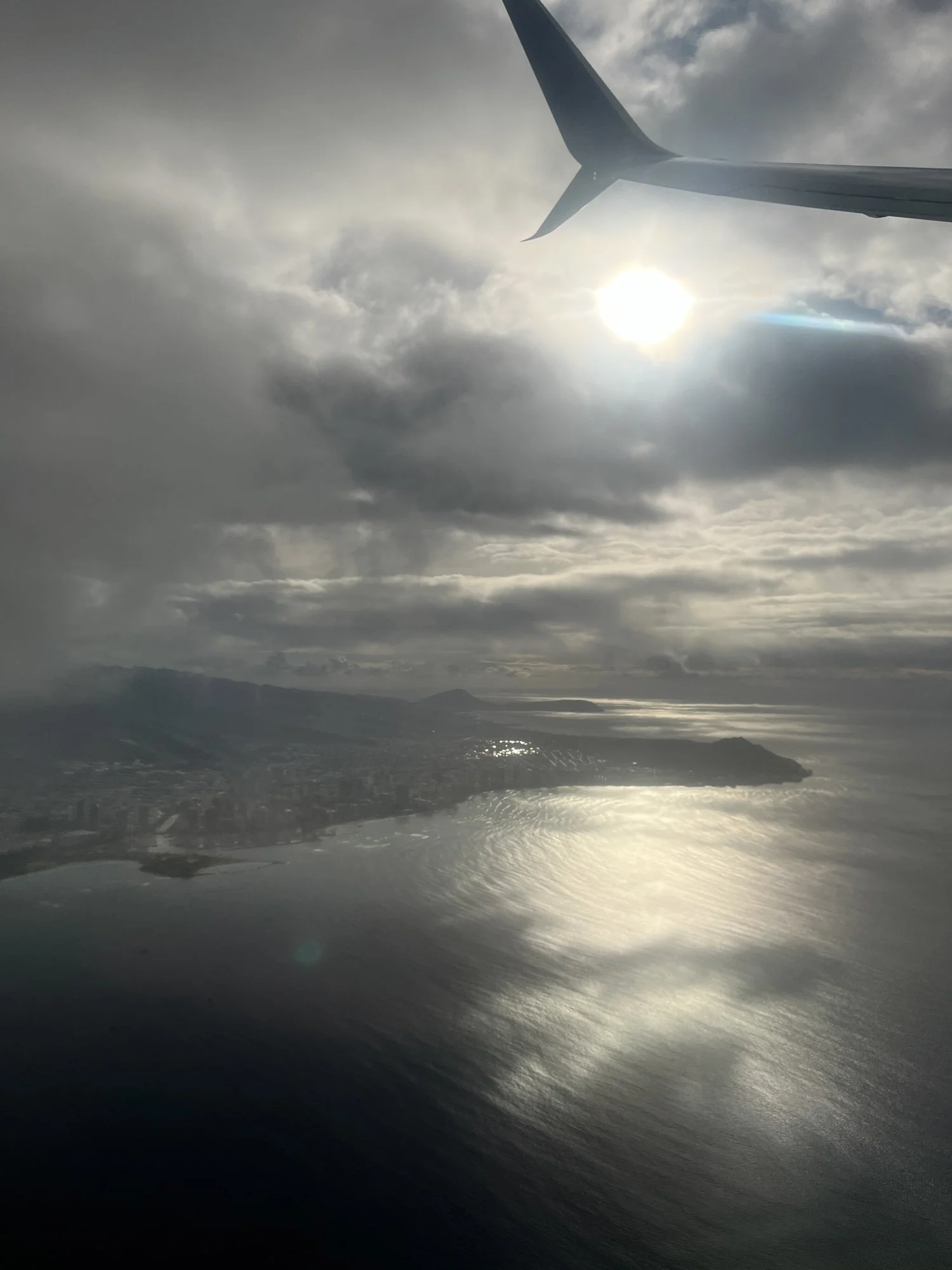
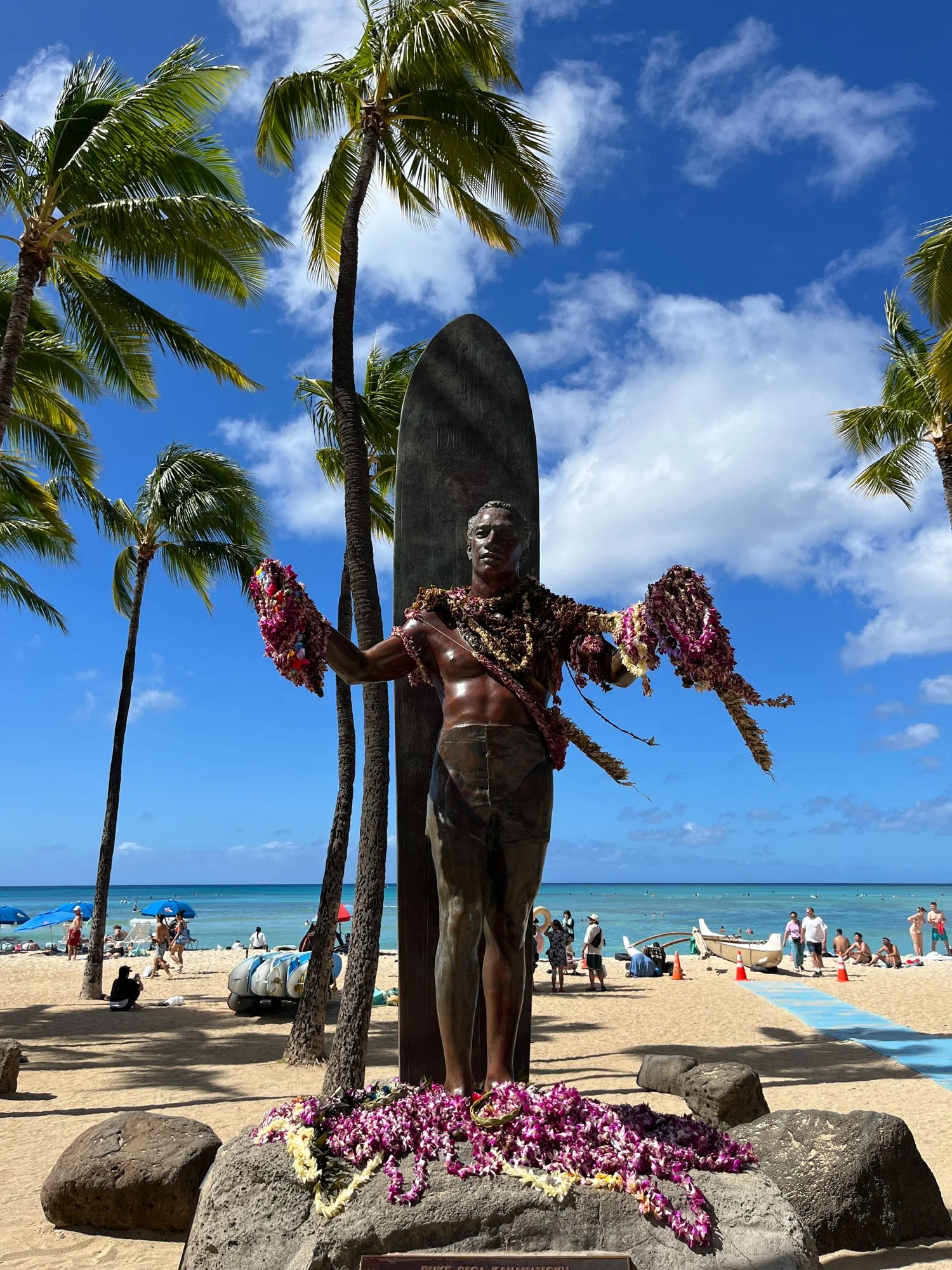
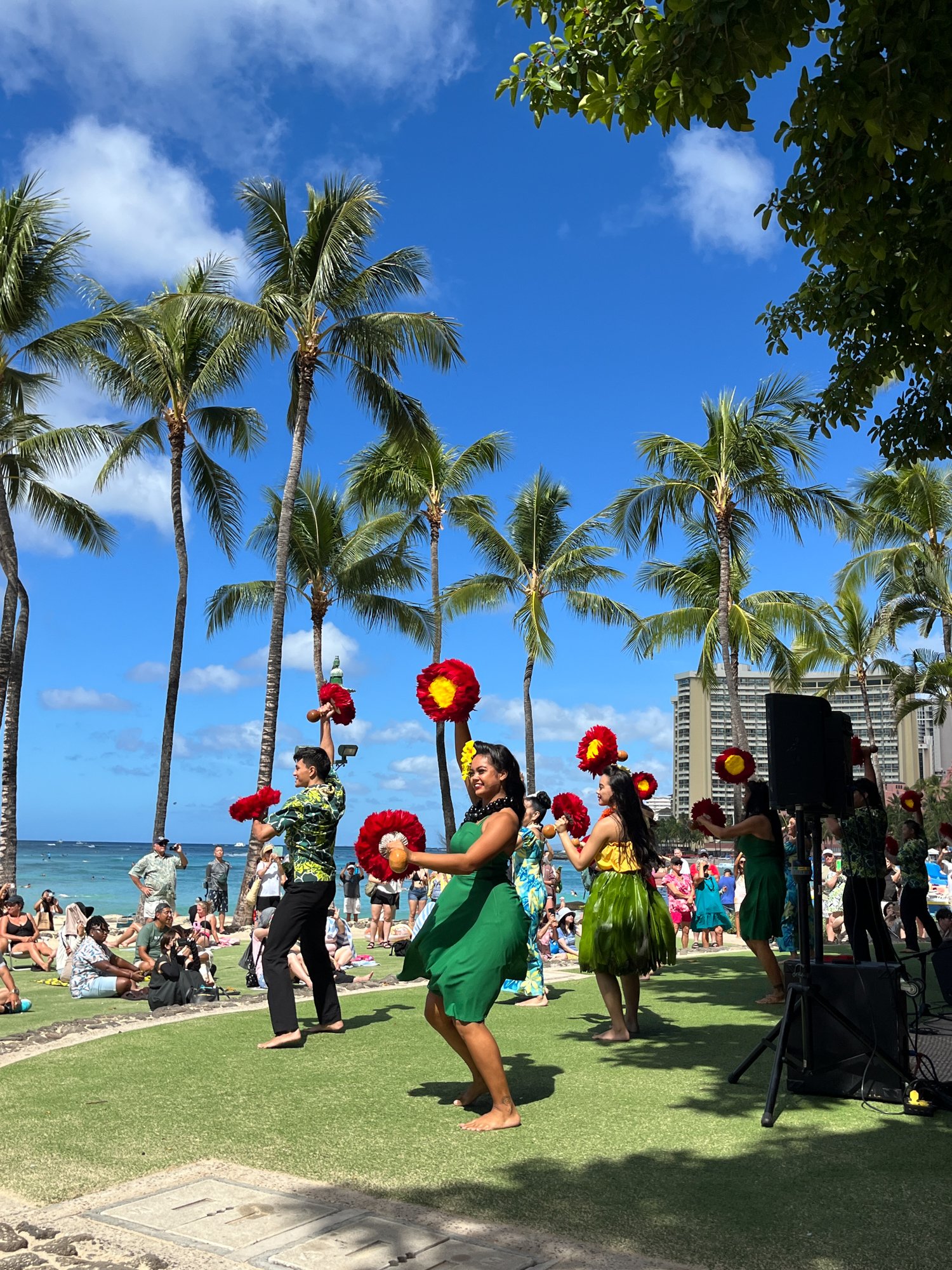
HNL
By Michael H. Kew
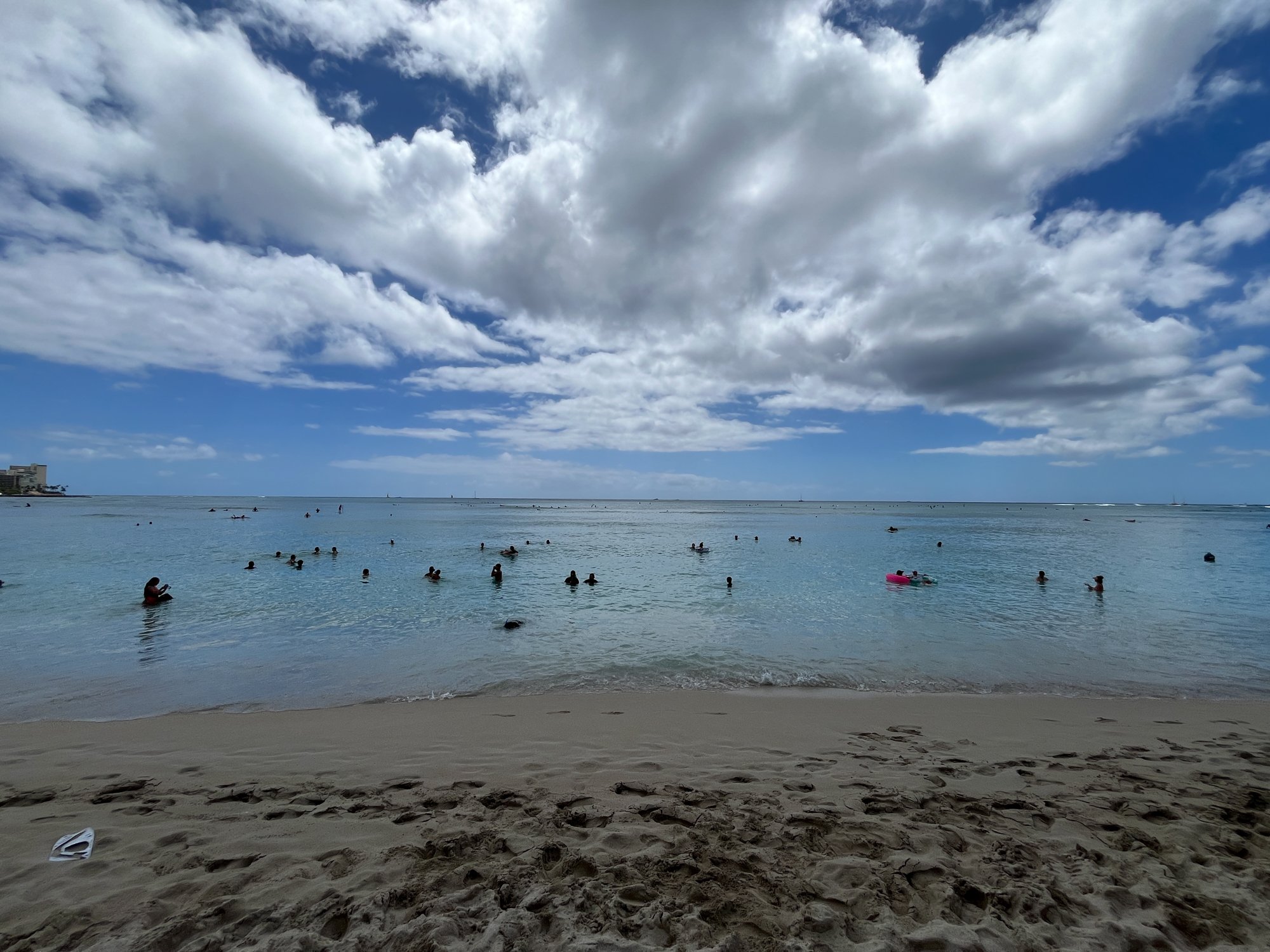
Melting from the masses a half-hour before dusk I slink into another intensely private public swim, brine-dreaming, sound-absorbing, scenically sensing the ancients perhaps as well as any haole can.
Near the sand is a small giggling Japanese girl receiving a surf lesson from an older tattooed Hawaiian still wearing his sunglasses, long hair in a topknot.
From the groin rocks her parents watch closely. They are sans sunglasses.
He shoves her into a green wavelet and urges her with the usual “Up! Up! Stand up! Stand up!”
Which she does and, for a few moments, beams the delicate and infectious purity of glee.
I hoot.
The man looks at me square.
"Yeah, man," he says, looking relieved and pointing up—a signal. "Makes 'em smile. Every time. Every. Single. Time."
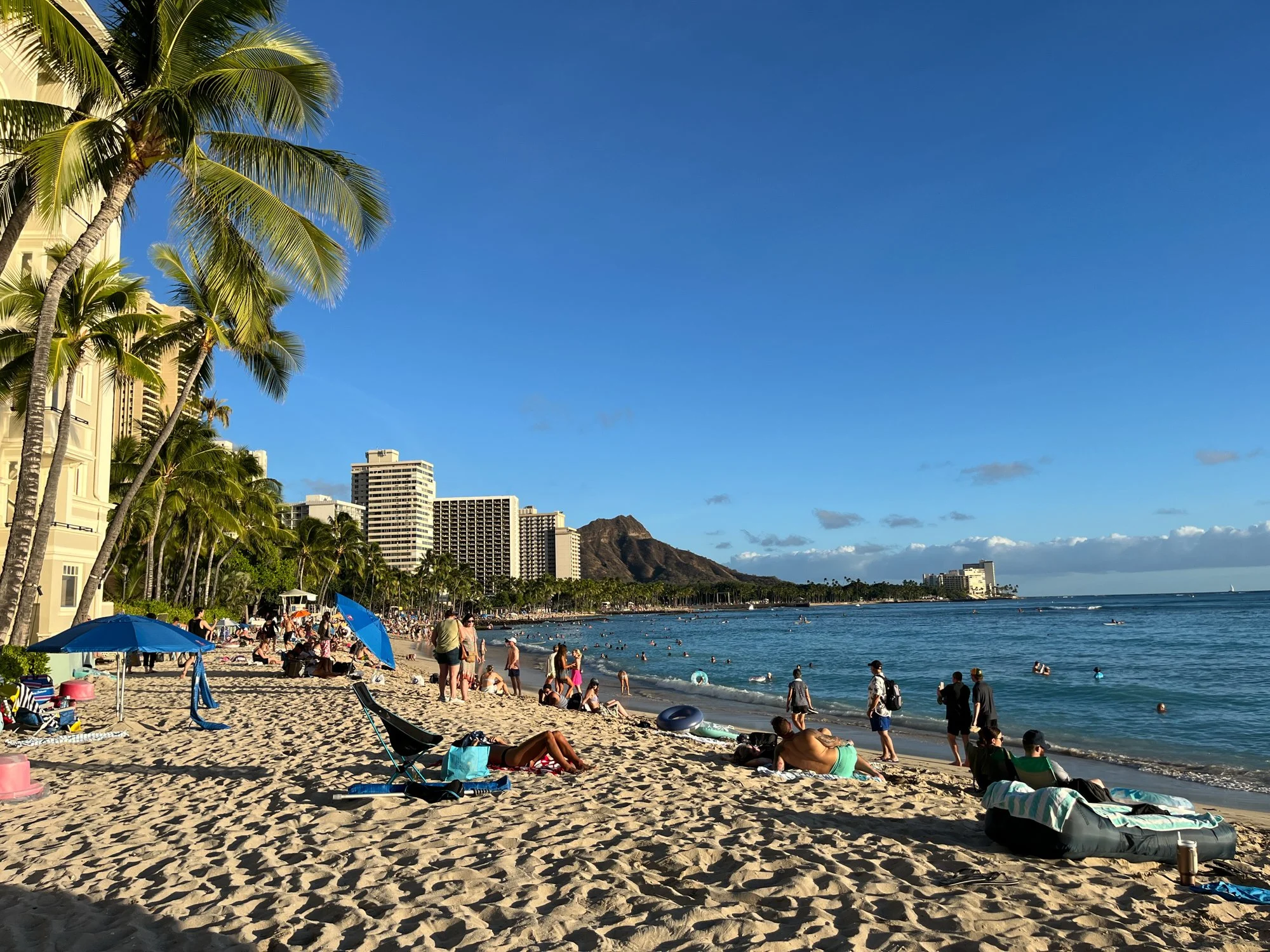
A bit farther out above a tiny shallow sandbar I find a chatty quartet of local pre-teen girls on longboards, feathery and adeptly cross-stepping along the consistent 10-inch southerly rills. With the front-lit backdrop of Diamond Head, as she passes me, the soft orange glow perfectly floods one of the girls’ noserides, captured as an instantly timeless classic Waikīkī snapshot by my mind’s photographic eye seeing here the next-gen of ocean women, tiny Rell Sunns, the quintessence of Hawaiian innocence in this holiest of hallow.
Sky beyond sky. Every few minutes, airplanes ascend southeast. While afloat I scan back into the flood of Sun, incongruous as it is with the native natures and Diamond-Headed regality.
Hemmed by the gentle surface warble, I close my eyes, soft slaps of water against my ears, greeting the Hawaiian ocean’s sinews of perpetuity, direct link to everything prior. I gaze up at the wheeling pairs of white terns, also known as manu-o-Kū, Honolulu’s official bird, Oʻahu being the only major Hawaiian isle on which they reside. While widely seen in the Northwestern Hawaiian Islands, on Oʻahu, they nest only in-city.
Broadly, Hawaiian navigators would see manu-o-Kū as the indication of nearby land. Ocean voyagers used the bird to navigate because manu-o-Kū typically fly out to sea in the morning to feed, returning to land at night. Navigators would likely reach the beach by going in the direction the birds were coming from in the morning and then follow them back to shore at night.
Focusing to the horizon I thread my mind into an aquatic meditation, swimming slowly, leisurely, intaking, exhaling, serenely summoning those who’ve preceded—the immense societal thunder, the conflict, the commercial fuel bubble in which true Hawaiʻi too is a ghost. Everything is rentable. Even happiness.
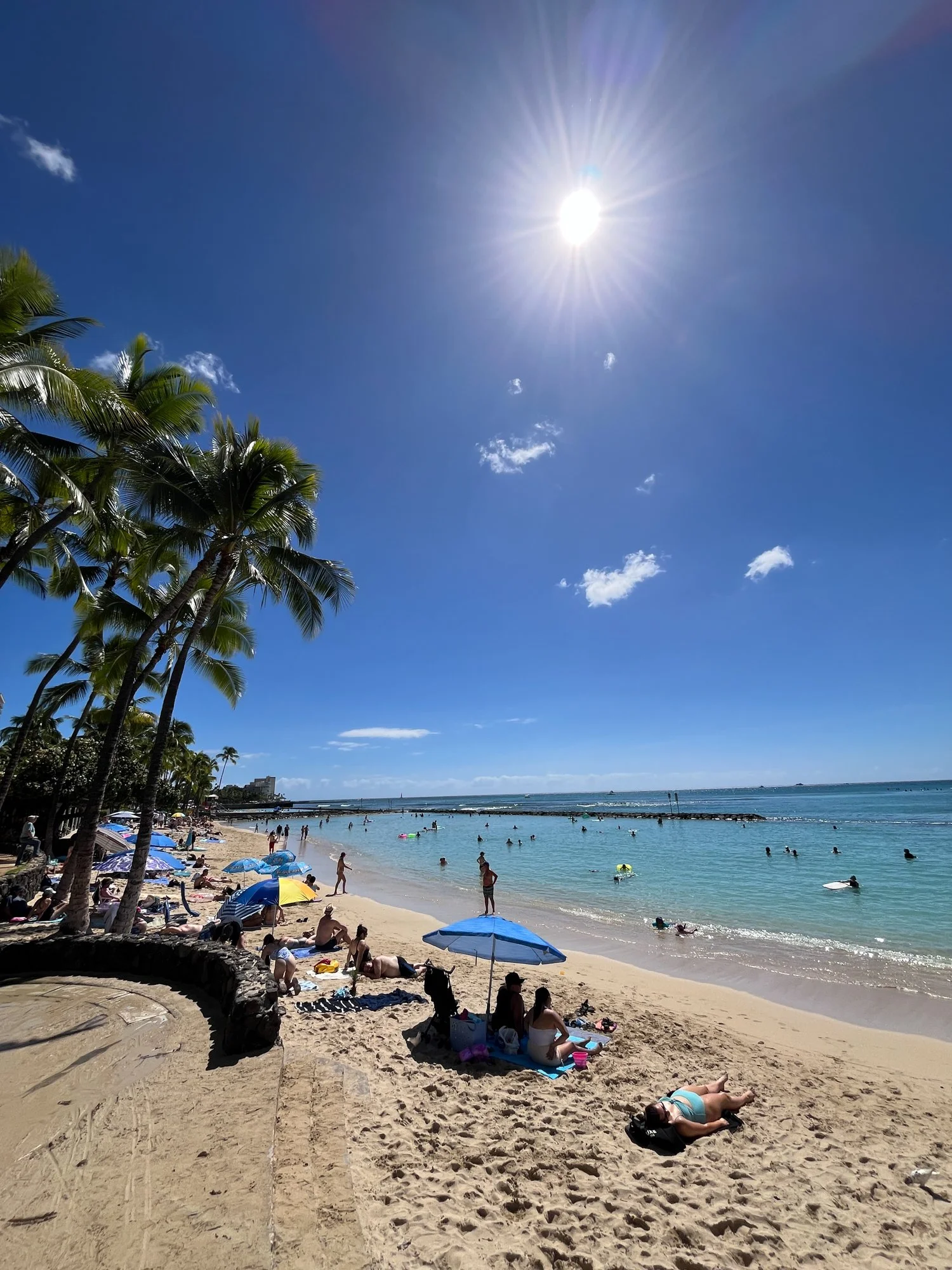
Waikīkī might be the world’s best-calibrated balance of tourism’s insufferable churn, fomenting this polarity of place in which the present rues the present, where anything goes. Where time, if you let it, strains to stand still.
I swim into the channel between surf spots. Nobody and no waves at Queen's but perhaps 60 people are crowding Canoes—idle surfers, paddlers, foilers, outrigger canoeists, kayakers, SUPers with phones in waterproof cases to capture the classic screensaver, the forever-glow digital postcard, the look-at-my-vacation Instagram reel.
Waikīkī sunsets—a hypnotic empire.
Afloat, you can smell the rousing scent of a moke’s beef barbecue sent seaward in the brisk offshores, whisked down here and over/between white high-rises from the shadowed Koʻolau Range’s crown of cloud.
You can smell the eonic histories of plumeria supplanting pollution and petroleum.
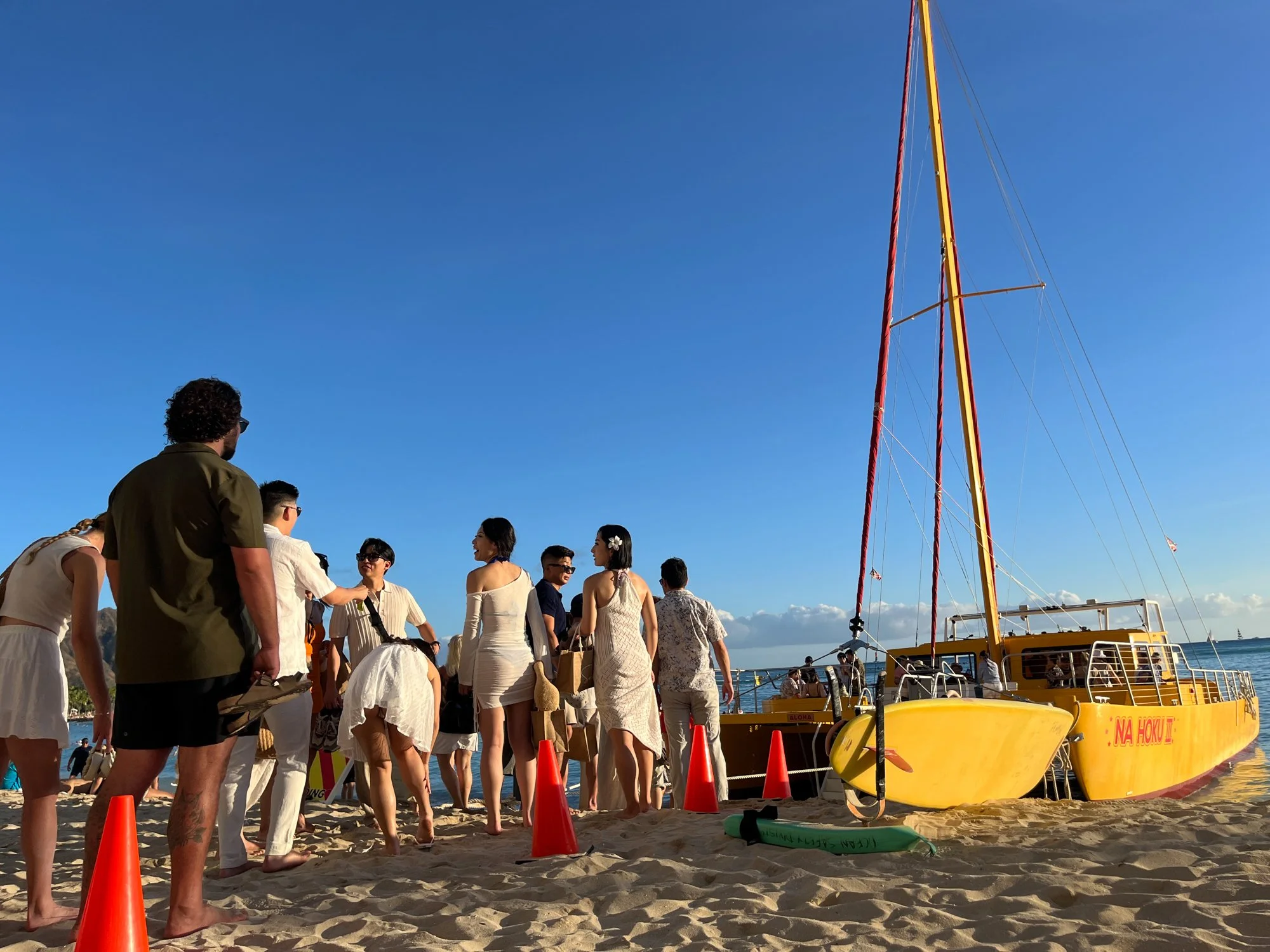
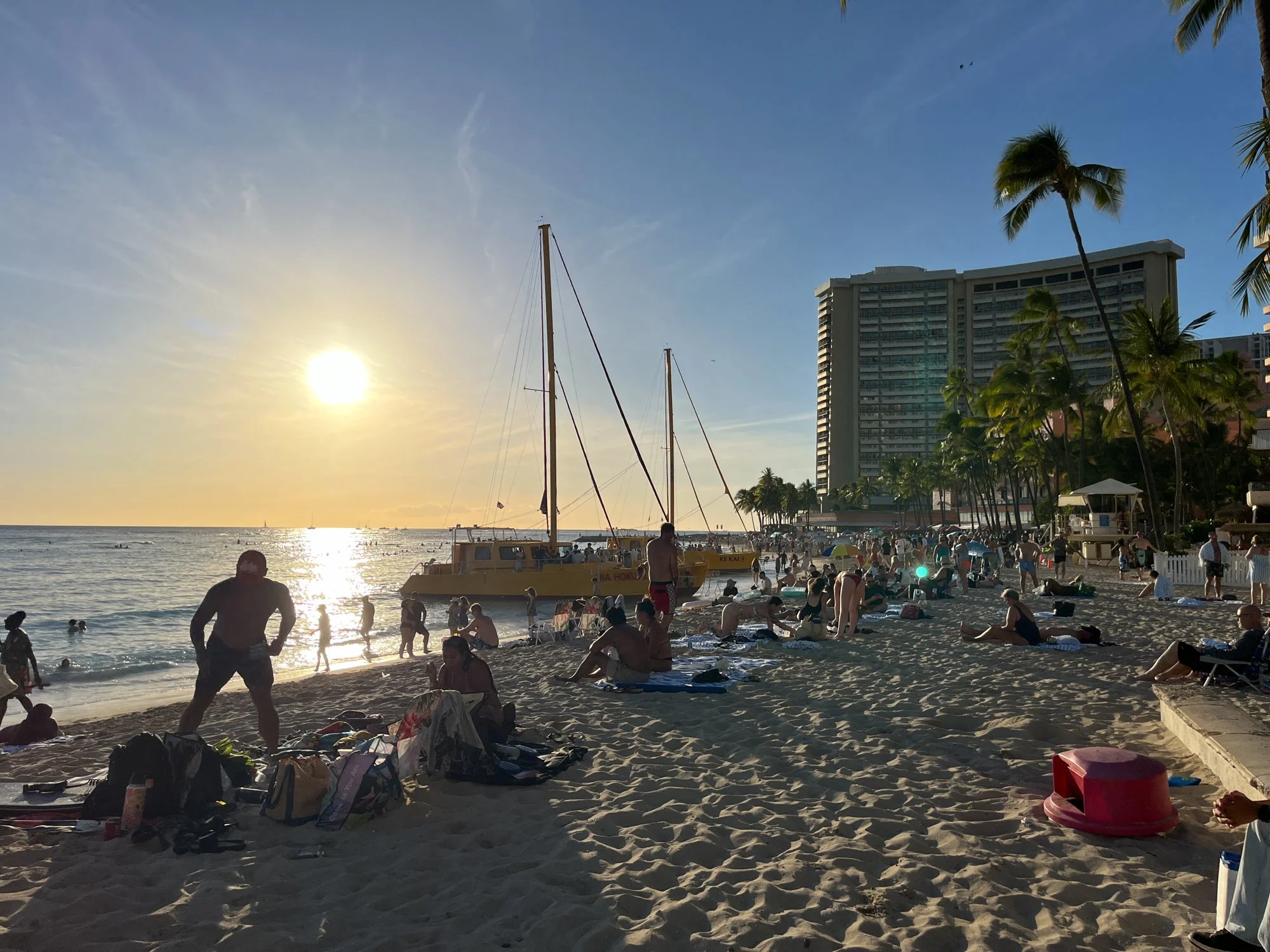
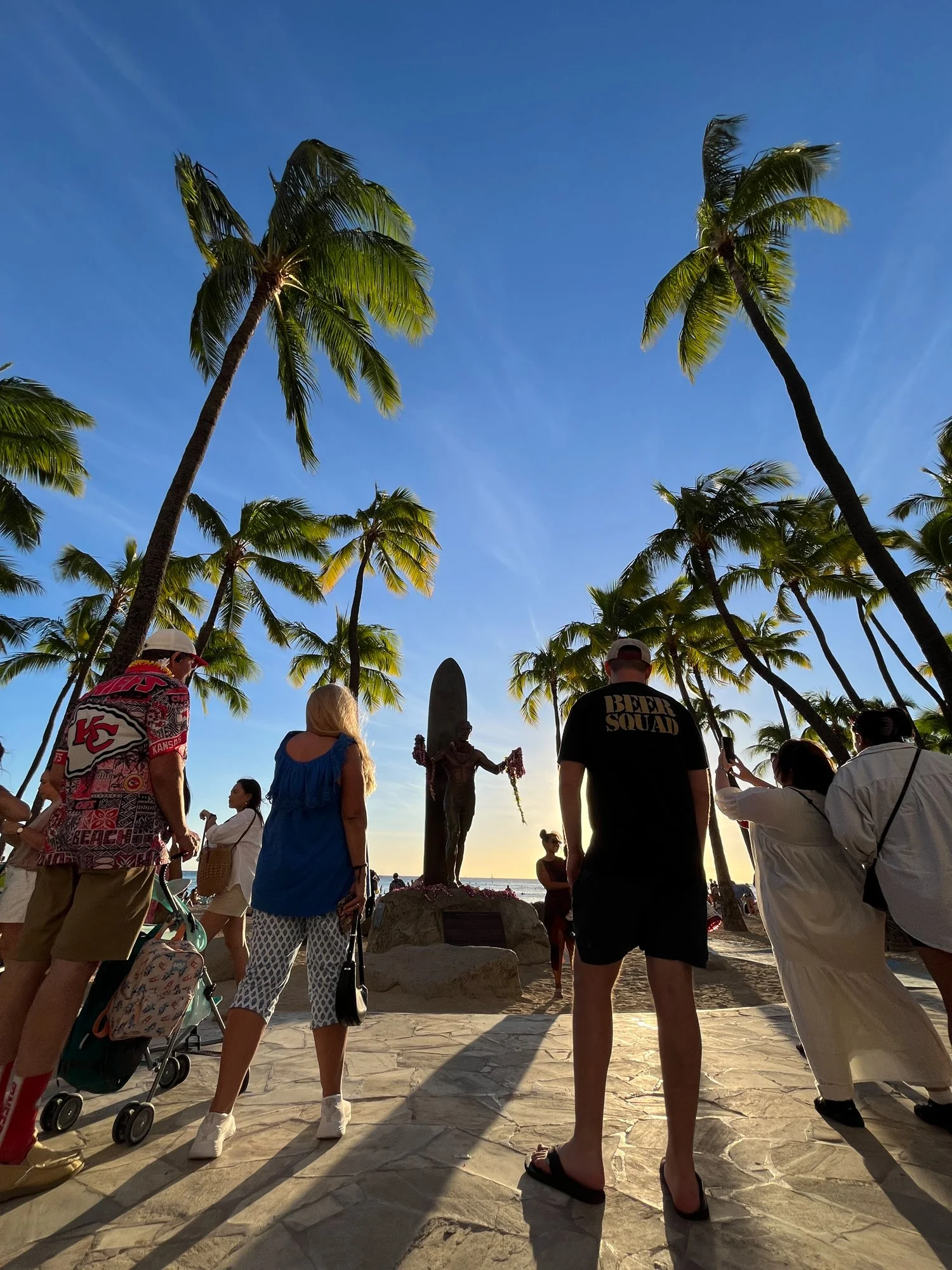
You can smell this wind as it aerates the mind amid all of our golden-hour supplications. Amid bent-knee proposals. The late sunbathers. Japanese weddings at Moana Surfrider. Yoga moments on the Kūhiō Mound. Breezing jollity as the catamarans again prime for happy-hour cruising.
Why go elsewhere? For some, this is all they’ll see. All they’ll remember. Communal paradise. Waikīkī—happiest place on Earth.
At dusk I ease shoreward. The sunset liquifies. Slashes of pink wash the sky. Areal pastels gather 'round. A swaddling closure.
Invisible, a spectator from pedigrees bereft of any sort of spiritual pantheist tradition (what are mainland European-American customs? Baseball and beef jerky?), I view this as emotional surrender. Enjoying what I can see and feel and hear, accepting what I can never know. A metaphysic life-vest cannot lift regret or a heavy heart. Because this is the illusion of a visitor’s Honolulu. It is Hawaiʻi in full. It is, for me, justly impenetrable. It is inarguably the challenge of reality.
Two paths to paradise: through your vision or through your death. Right? Because paradise like Hawaiʻi is not a place. It’s an entho-mandala. See its feather of ghosts, its requiems, its fundamentally mental force fields.
Excerpted from Xanatollu (2026), my book about the world-famous Island Hopper flight route from Hawaiʻi through Micronesia to Guam. Signed copies available here from my online store.